I can't speak to the nutritional aspect of it, but having attempted various high protein or protein/fat heavy keto diets in the past with varying levels of success I do have to say it doesn't take long before you just get sick of eating meat. The charm of it wears off. Our paleolithic ancestors would have craved and sought out any and all carbohydrate sources, and preserved summer fruits and berries as much as they could have. First nations here in Canada made/make pemmican, a mixture of animal products and berries from the summer, as a winter food, and I'm sure this practice goes back for a very long time.
At a certain point, I'm sure being sick of meat (especially from fairly large and omnipresent megafauna), the services of a companion dog/wolf would have been worth the waste.
Also many northern hunter gatherers eat the contents of the stomach of their kills as a way to get carbohydrates, trace nutrients and vitamins, etc. Between that and a source for furs, leathers, bones (for tool/structure making), one might make more kills than necessary and have excess meat.
> it doesn't take long before you just get sick of eating meat. The charm of it wears off.
Yes and no. Food stops becoming an enjoyable activity, and just becomes fuel. If you're hungry, in the true sense of the word, you'll have meat and fat and ask for seconds. Fat adaptation works because if you have fat around you, your hunger signals tends to fade as you're already carrying a significant amount of energy.
The fact that carbs and sugar are so sought after is great when you're a paleolithic man, but is the cause of the modern obesity epidemic - it's an energy source than can be easily stored and accumulated around the body, so our taste buds have evolved to encourage us to eat plenty, because it was VERY scarce until recently.
> If you're hungry, in the true sense of the word, you'll have meat and fat and ask for seconds.
If you're really hungry you're going to ask for seconds for everything.
Source: Fussy 11 year old me stuck in a summer camp with awful food. The first morning there I refused to eat and after breakfast they took us hiking up some mountains for 4 hours or so. For lunch I asked for seconds of their awful food and I enjoyed it :-)
Monday: cat gets some porridge. It looks at it and says: screw it! And walks away.
Tuesday: cat gets porridge again. It looks at it, sights and exclaims: porridge! And walks away.
Wednesday: cat gets porridge again.
It looks at it in a semi-curious way. Hmm, porridge.. And walks away.
Sunday: cat gets porridge again.
It looks at the porridge, its eyes fully focused on it. It smells it.. It walks around the plate trying to catch even more smell of it. And then it screams: porridge!!!!!!! And eats it all in just a few large bites.
I think this is the source of most young picky eaters. They just aren't hungry. I know my kids are picky unless there are no snacks in the house, then suddenly they like everything!
The trouble we run into is if you try to call their bluff and make them wait it out until they are actually hungry, suddenly it's bedtime and you have a kid who won't go to sleep because they didn't eat anything, and it stops being their problem and turns into a massive inconvenience for you.
But probably the better idea would just be for us to ration snacks more closely throughout the middle of the day.
This 100% the situation we have with our almost 4 year old daughter. My wife has a soft spot,so any cries would make her surrender in a second,so it's very easy for our daughter to just walk away from a really nice meal because it's not ' what she likes' and then keep coming back for all sorts of snacks or the food she really likes.
I think these habits are developed over more than a few days too. I bet the pickier you are, the longer it takes for your biology to tell you that it's time to eat. Also this is all dancing around wanting to call picky eaters spoiled brats lol.
that's a special case, or he's a pantry cat burglar. I've known both. One case, the boy is autistic so once he heard he would get a specific food, he wouldn't eat until he got it. The other case the kid had a stash of snacks in his room and would break into the pantry when mom wasn't looking.
I think ultimately a lot of the traditional drive to celebrate the changing of the seasons boils down to the change of diet (either improved, or worsened) and the rituals that come after or have to be done before that time.
Spring is here. Any day we can stop eating porridge!
I have heard this recycled notion about carbs being scarce many times, but in this context it makes little sense. If fat adaptation is so efficient at converting food to energy and there is more fat around than carbs, why would the craving for carbs evolve even? I have also done keto a couple times and my experience is the same — in a month I just can’t stand anymore meat and bacon and going back to a balanced diet feels very good. I also can‘t stuff myself with carbs and start seeking both protein rich foods and fatty. Would question the whole „carbs where scarce, so we evolved to overfeed on them“ dogma. Why would fruits be more scarce for a non predator (as where human ancestors), than meat? It feels like a whole lot is missing in the story.
Carbs and protein are water soluble while fats are lipid soluble, and your cells preferentially burn water soluble molecules before lipid soluble. There can be tons of energy in the form of fat available, but to access it you will first burn up your available protein. This protein is necessary for things like cellular repair, muscle growth, etc. You need to sacrifice this to access your energy stored in fat - an acceptable tradeoff when you're freezing in the middle of winter, but certainly suboptimal. Carbs on the other hand will burn preferentially before proteins, so you can have your cake and eat it too. Carbs can't be stored for very long, but they can be readily converted to fats for storage.
In the past, it wasn't so much that carbs were rare as calories in general were rare, and carbs were merely the most desirable. If you're an athletic hunter gatherer, you want as many carbs as possible for fuel so you don't have to switch over to your small reserve of fat and give up your proteins along the way. On the other hand in the modern day it's easy to get more carbs than we can burn in a short period of time so we have a lot of excess calories that get added to our emergency supply. Since we actually have to go through a good bit of effort to starve in the modern world, we never switch over to our emergency supply and thus it never depletes (ie we get and stay fat).
Of course you crave carbs after eating mostly proteins and fat - as far as your caveman brain is concerned, you are starving and need real food. It's just an unfortunate reality of our modern civilization that most of us don't have the metabolism to support a caveman's diet.
> in a month I just can’t stand anymore meat and bacon and going back to a balanced diet feels very good.
90% of curries are keto friendly, Thai food that doesn't involve noodles or rice, a-ok, tons of Chinese dishes are also 100% keto!
Going on any sort of restricted diet is going to involve learning how to improve your cooking game, but after years of Keto I can put together meals for large groups of people that are 100% keto and people won't even notice, and that is including the hazelnut cookies with chocolate ganache for dessert!
> Would question the whole „carbs where scarce, so we evolved to overfeed on them“ dogma
I agree historical evidence may be lacking, but a large percent of the population[1] do overfeed on carbs and a mix of carbs+fat, in a way that is has dramatic health consequences.
The way I always like to put it is, between a stuffed baked potato, and a steak, what will people at more calories of when given a chance? I know for me it is the potatoes, I can easily go through 2 entire potatoes, stuffed with sour cream, chive, shrimp, and cheese. (and I know the shrimp sounds super weird in there, but trust me, try it, it is amazing!)
That is 800 calories, and after that I'm going to wait 15 minutes and resume the rest of my dinner for yet more calories!
But if I start with 8oz of steak and some well prepared kale, well, I'm done for the night. ~700 calories total for the entire meal, rather than starting with 800 and working my way up from there!
The thing that changed my mind was realizing that skipping the bread at dinner didn't make me any less full.
[1] Such unhealthy habits are spreading world wide!
Thai food and often involve palm sugar in what you’d consider savory dishes. And depending on the brand of coconut milk that’s used you could be nabbing extra carbs there too. So even without noodles and rice you may be sneakily pushing up against your daily carb limit and not realize it.
Calorie counting is illuminating. I've been able to eat 4000 kcal of mostly carbs in one sitting and perhaps up to 7000 kcal in one day, and I need some effort to eat 2000 kcal of meat/fat in one sitting (about 1kg of steak).
In general I tend to overeat carbs and go above my daily calorie intake if I were to eat until satiety, whereas I tend to eat at or under my TDEE of meat/fat and have to sometimes force myself to reach my daily requirements.
How much of the carb overfeeding is marketing and conditioning though (and mostly a US-centric phenomenon)? Any caloric excess is bad, nothing special about carbs. Demonizing one particular nutrient seems like a silver bullet and I could also enjoy 50 different ways to make eggs and ham and 50 varieties of brie and keto bread, but something felt amiss. That said, still want to try going 100% vegan someday.
> Why would fruits be more scarce for a non predator (as where human ancestors), than meat?
Seasons change?
Meat is available year-round but can be dangerous to acquire and prepare safely.
Fruits/veggies are easy but seasonal food sources that store poorly, and with vast competition.
Grains and tubers are difficult to transport, spoil, and are of limited supply determined by the growing season (especially without agriculture).
Our hunt & gather ancestors followed the seasons far closer than farmers. At least on gut check, it seems fat adaptation would be strongly selected for as well as a strong taste for carbs as available
Also not to forget that modern fruits and vegetables are nothing like the ones we've spent much of our evolution with. I would guess honey would have been the most sugary thing available, and still guarded by a swarm of angry bees.
Was/is there that much of seasonal variety in the African regions, where humans evolved mostly? And why should we stop at humans and not go back even further?
Maybe, in essence, the bacteria that we host to help break down carbs start producing something that makes us crave/prefer carbs?
It seems like the bacteria would, in essence, be self interested and might have developed their own evolutionary mechanism to promote the supply of their food source?
In other words, if we, essentially, keep internal bacteria colonies to help break down specific types of food, those colonies may encourage consumption of their specialized food source?
We may also, symbiotically, encourage the preservation/maintenance of internal processing capability?
On the contrary, there are orders of magnitude less megafauna than plankton. And there’s a diminishing range in between. It’s easier to get berries for dinner, than boar. Of course, things could be the opposite during Ice Ages, but that’s just a glimpse in geological time, not convinced that metabolism would change entirely during that period.
A trip to the woods would with a high likelihood show that there are more berries around than berry eating boars. But my point is not that there is no competition for resources, and not that there always was an abundance of everything, but that the carb scarceness theory is not a complete explanation. Because food in general was scarce, and we either should have the same cravings for other nutrients or the „carb-stuffing“ notion is a bit overused.
Might be that fat was as scarce as carbs prehistorically. Have you ever eaten wild game? They are drastically leaner than farm animals. I imagine they were even leaner back when there were more wild creatures competing for the same food supply.
It's not an accident that our palate has evolved to reward us for finding salts, fats, and sugars.
Nor fat, nor carbs are an essential nutritional component. The body can not synthesize certain amino acids, but it can convert protein to both fat and carbohydrates by means of gluconeogenesis. If anything, we should have cravings for sources of protein, not sugars. One could argue that sugars provide the burst of energy for the metabolic pathway that could be make it or break it in cases where that burst gives an advantage. This, and not the scarceness argument, which seems just thin to me, although mainstream opinion.
The very rough gist is that there is historical evidence of pre agrarian humans starving to death with stomachs full of lean meat. In a nomadic lifestyle where they chase down prey protein costs too much energy to digest and convert into usable energy.
Fat is an essential nutritional component. As an example, cholesterol is necessary to produce hormones such as testosterone, estrogen and cortisol. Thankfully, it's pretty much impossible to avoid if you eat meat.
Carbs are not essential. You can live on zero total grams of carbs.
Also gluconeogenesis only converts proteins to glucose, not fat, at least not directly.
Just an observation that I've noticed about myself:
* During periods where I am trying to lose weight or not working out much, I tend to not crave meat very much. In fact, eating certain types of meats (for example, steak) would kind of make me experience mild nausea.
* During periods where I am working out a lot (lots of running and heavy weight lifting), I have a strong desire to eat lots of meat and don't tire of it.
For me, the "charm" of meat depends on the physical requirements of what I am doing in some period of time.
Proteins are definitely not only in meats. Beans have more protein per weight than meats. Even your diagram suggest not only meats are high in nutrients.
Far far more kills than was necessary for caloric content. This idea that early humans "took only what they needed from nature" is quaint. They took what they could use, which means basically whenever usefulness outweighed the risk of the hunt. I remember an early history class about a buffalo jump. Teacher told us that "all parts of the animal were used." Well, not that giant pile of bones. If the dogs were hungry, or one needed some fresh bones to carve a tool, some large herbavore was killed. Im sure that lots of useful meat was left to the elements, just as with hunters today.
I can't speak to the nutritional aspect of it, but having attempted various high protein or protein/fat heavy keto diets in the past with varying levels of success I do have to say it doesn't take long before you just get sick of eating meat.
What kind of meat were you eating and how was it cooked? I did a month of carnivore diet and never got sick of eating rare ribeye steak, lamb ribs, or lamb legs. I think I would get sick of chicken or pot roast or well-done ground beef. That said, I never stopped missing carby meals like mac 'n cheese or cookie dough ice cream.
> I think I would get sick of chicken or pot roast or well-done ground beef
Honest question, why do people seem to love rare meat so much? I agree that tough meat doesn't taste good, but I would argue a properly cooked pot roast is about the most tender cut of meat you can find.
Having had what most "foodie" people would call a "properly cooked" just barely above rare steak, I always find it to be unsatisfying.
Honest question, why do people seem to love rare meat so much? I agree that tough meat doesn't taste good, but I would argue a properly cooked pot roast is about the most tender cut of meat you can find.
Ribeye, lamb ribs, and lamb leg are all relatively tender. Beyond a certain point, I don't need my meat to be that tender. Frankly, ribeye is probably too tender to be optimal for health and physique -- it would be better to develop that Chad-like jaw to eat something a more tough cut ...
Rare meat is not only juicier, but too me it tastes a lot better. Rare meat tastes good, the denatured proteins of pot roast do not taste good. And while there is a tremendous amount of social conditioning and idiosyncrasies that determine people's tastes, I don't think is just me -- most people eat their steaks plain, but almost everyone I know adds sauces and fixins to their pot roast and brisket and other meats that have been cooked forever. IMO, they ruin the meat with over cooking and then add in sugars and other flavorings to make it palatable.
A well cooked pot roast is not that much different from the sous vide trend that's becoming so popular.
You put the roast in a dutch oven coated in salt and pepper the same as you would with a steak and a bit of water, then you let it cook at ~200F for 4 - 8 hours.
Usually you also slow roast some onions, carrots, potatoes, etc. along with it the last little while.
Then make a gravy from the drippings.
The gravy is good on the meat, but it's more for the vegetables. The meat is delicious in its own right.
With sous vide the collagen breaks down, but the internal temperature never gets high enough for the proteins to denature. Internal temp should not be higher than 135. The meat is still pink if you are doing it right. With pot roast, internal temp is going to 190 degrees or higher and the proteins denature (in addition to the collagen breaking down). I find that sous vide chuck roast taste better on its own than chuck roast, but it is worse than chuck roast seared and served rare. But the sous vide version is more tender than rare chuck roast, while being less tender than pot roast.
> With pot roast, internal temp is going to 190 degrees or higher and the proteins denature (in addition to the collagen breaking down). [emphasis added]
For a bad pot roast, maybe. I've never cooked a pot roast so hot that it would reach that internal temperature, and I've never known anyone else to either.
EDIT: Looking up recipes now, apparently some recipes do call for taking pot roast to much higher temps than I cook it to. Maybe that's why fast food roasts are so bad, but also why I don't eat them.
What internal temp do you cook until? Do you cook the whole roast as one big 6 pound chunk, or cut it up into pieces before cooking it? When I've cooked brisket or pot roast, I cook it until it is fork tender, which I think is usually around 190 degrees.
I leave it solid. 160 or so because my wife won't eat meat if it's still pink and a roast is hard to cook two of (versus steaks). We still find it plenty tender, they maybe not fork tender tender. But I'll do a long slow cook to help it become tender versus heating it up more.
In terms of statistical preference, I'm not sure there's a actually huge difference. Some people like blue steaks, others like well done, most people are in between.
I think people who like rare steaks just talk about it more because it's the "right" way to prepare the "best" cuts. A $200 steak is just going to be most flavorful when it's on the rarer side. But its just a signaling thing if you're talking about skirt or flank.
Same question could be asked "why does everyone all the sudden love whiskey neat so much?" - they don't, its just that the whiskey folk talk about it conspicuously.
I think people who like rare steaks just talk about it more because it's the "right" way to prepare the "best" cuts. A $200 steak is just going to be most flavorful when it's on the rarer side. But its just a signaling thing if you're talking about skirt or flank.
IMO, it does not have to be a $200 cut, a $9 ribeye from Walmart cooked rare is far better than a $9 pot roast sandwich from the local fast food joint.
With at $4/lb chuck roast it's more of a trade-off. A chuck roast steak cooked rare is a little too tough for my liking. But it is far more juicy and tasteful than the same cut slow cooked and served as a pot roast
Almost any steak will be better than a pot roast sandwich from probably any fast food place (there are a few exceptions I've been to). And Walmart groceries, contrary to popular belief, are actually pretty decent. Mostly on par with any other grocer in the areas I've lived.
Also what on earth makes a steak worth $200? I bought a 1/4 beef this fall for something like $700, and that includes all the nice steaks and roasts along with like 50 lbs of ground beef.
In addition to what others have mentioned, a $200 steak is probably -- hopefully?! -- dry-aged. Something like 1/3 of the weight is evaporated away during dry-aging, so that 16oz steak was originally 24oz. There's also loss to trimming, which is required due to both a desiccated crust and fungal and mold growth on the surface. And it is typically a high-grade beef to start with. And it's time intensive.
I know they aged the carcass for two weeks on my beef before they broke it down into cuts. I think the "dry aged" stuff is generally aged even further than that, right?
I think I read somewhere that mass-market beef is generally not left to hang after slaughter, is that correct?
Well, a nonlinear demand curve for luxury goods comes into play. Also, $200 steaks are typically prepared (at which point you're paying for restaurant ambiance and the chef's time). Raw steaks don't get up that high unless aged or pre-prepared in some way.
But more generally, steaks just scale well to the high end. They keep getting better and better as cut, livestock, and preparation improves. That's not necessarily true for other foods. E.g., most pastas (while obviously delicious) will only get so good barring a virtuoso chef.
I recommend a test. Find a friend who's really good at preparing steaks. Have them cook a good cut & a regular cut from your 1/4 beef, and you cook one of each too. You'll taste the difference from cut and preparation quality.
My experience with buying quarters was 'so-so' enough that I stopped. Even when the meat was good enough, I found that I felt like I was being ripped off. There is just so much opportunity between the farmer and butcher to cheat you, and you don't have any insight. Maybe it's just me.
I can really only imagining this working out consistently if you really developed those relationships, and for a purchase I'd make a few times a year at most, it didn't seem worth it.
I've found butchers and farmers to be generally upstanding people. I'm also in the heart of farm country. I would be a lot more leery of people targeting a more urban market.
A good compromise is an actual butcher, the kind who has a relationship with farmers and breaks down primal cuts.
I live alone so a quarter beef would be a real challenge to finish off. Instead, I can go to the local butcher and get the usual cuts, and the unusual cuts, soup bones, hard fat for tallow, and so on.
Where I live, at least, it's all local, beef, lamp, goat, chicken, doesn't matter.
A few pitmasters in Texas would like to have a word with you about over-generalizing....
Seriously though - a cow is a huge animal with many cuts. Some are better rare, some are sublime when cooked to a high enough heat to break down the collagen in it.
Slightly pink pork is generally considered safe in most countries now, and preferred for some leaner styles (like pork chops/medallions). I've tried it and it benefits just like a beef steak.
It's juicy. Some people's preference of "dry" varies.
Some people can't fathom others liking well done, some can't fathom rare. Pink in the middle is preferred but at red it's too watery for me, to each their own.
Most of the juice in my experience comes from cooking the meat long enough to render the fat. I've had medium-rare steak before where the fat was all still solid. Didn't seem all that great to me even though all the others raved about it.
Yes, I think most juiciness is actually fat/oil, not water. Pretty sure one of those more serious food blogs measured it once. This is why basting in fat is important sometimes.
I was gifted some leftover thin wagyu cuts recently. I cooked them through because they have so much fat they're still tender, and the brown adds flavour. It just had to render enough. I guess they were technically "well done" but perfect for me, as someone who prefers medium on typical steak.
From my standpoint, I never understood why people focus on the meat side of this diet. I never eat more green vegetables than when I am on a keto type diet. They are everywhere and I even have slight variations into vegetables I do not normally consider.
However one point most people miss, you don't have to cut out BBQ or other meat condiments. You would be amazed how far that tablespoon actually goes and you still stay way under your carb limit. Once I discovered this the dieting got immensely easier. Same goes for types of salad dressing; I tend to the mix it yourself variety from Good Seasons.
I do not let myself slip into reasoning "just one slice of bread" is okay though. You do however need to look beyond foods you are used to. Eventually it became a game for me which made the whole process more fun
From my standpoint, I never understood why people focus on the meat side of this diet. I never eat more green vegetables than when I am on a keto type diet.
There is a growing group of people who believe in a carnivore diet, not just a keto diet. They have an active subreddit with introductory readings, a FAQ and wiki explaining their reasoning.
The tldr is that they believe we evolved to primarily eat meat, we get the best most bioavailable nutrients from animal sources, and that most plants have various toxins in them to discourage animals from eating them, and that even when cooked these toxins aren't completely destroyed and a lot of people experience low-level inflammation and irritation from plant sources, without realizing it.
I highly recommend not getting your anthropology lessons from diet subs on reddit. The level of information you get is questionable at best and often informed by incorrect stereotypes with little basis in reality. A lot of the same is happening here, with people talking about specific cold-environment adaptations like high meat consumption as if they apply to all of human evolution.
The current consensus is that groups outside the circumpolar regions typically ate large amounts of plant matter. In many groups it was even a majority of dietary calories, alongside things like honey and probably insects. This is archaeologically well-substantiated, even taking into account formation processes and preservation biases.
I get my anthropology lessons from actually reading the recommended primary sources from all-sides of the debate, and then using my own judgement about what makes the most sense and what is most convincing.
What is one or two best primary sources supporting your view that our hominid ancestors of one million years ago would have been eating mostly plants?
You've fixated on a particular date (1 MYA) and understood "major component of diet" / "majority calories in some groups" to be "all of our ancestors ate mostly plants". Neither is what I said.
First the date: 1 MYA was the time of H. erectus, not the AMH I was referencing. That's fine, but you'll probably be unsatisfied with the evidence from the period because it's notoriously thin. Regardless, by this time our ancestors had shifted to include megafaunal hunting and harder, diverse plant foods in their diet, so H. erectus populations were likely eating both. See [1]. For a good (slightly outdated) overview of the evidence problems, see [2]. In later periods, we can discuss things like dental microwear patterns, archaeobotany, optimal foraging models, and coprolite analysis as the evidentiary bases are so much better.
Secondly, you have to understand the difference between "plants were a large component of the diet" and "carnivores". All the former means is that meat was only about 30-70% of the diet, not upwards of 90%. The exact amount would have varied hugely by group, environment, and even the season or year. The diversity of the plants eaten would also have varied for the same reasons. For instance, some groups in the Mediterranean basin in the later Upper Pleistocene were sedentary foragers who would transition to nomadic hunter-gatherers at other times.
edit: overview of the elements of "forager diets" and the various viewpoints. There's also a large body of literature on archaeobotany, especially from temperate regions.
You've fixated on a particular date (1 MYA) and understood "major component of diet" / "majority calories in some groups" to be "all of our ancestors ate mostly plants". Neither is what I said.
My working hypothesis is that from a few million years ago to 100,000 years ago, our ancestors primarily ate megafauna (80% to 100% of calories) and so that is the diet we are most evolved to thrive off of. In the last 100,000 years, with the rise of agriculture and the extinction of many megafauna, there has been rapid selection pressure for humans to tolerate grains and dairy (and also breeding of tubers and grains to make them much more nutrition for humans). Toleration of plant and dairy food by modern people varies by race and by individual; but everyone can thrive by eating a lot of megafauna.
I am interested in evidence that contradicts this hypothesis -- particularly whether there is evidence that from 100kya to 3mya our ancestors were eating 30% or 50% or 70% or 95% or 100% plants. It doesn't seem like the links you gave me have such evidence. Got anything more convincing? The evidence from dental collagen and brain size energy requirements arguing for an ancestral diet of 80%+ animals seem more convincing to me.
I'm hugely pro-keto, but, I have to say, assuming advice for one group in a given region is true for all people worldwide seems like bad logic.
We already know that the gut biome between two modern Americans can differ so greatly that a diet that makes one person obese will have no negative health impacts on someone else.
We know that obesity seems to be "inherited" to an extent, mediated by epigenetic effects.
And there are examples of populations that can extract nutrients from foods, such as seaweed, that the general human populace can't.
Heck a good friend of mine, if he follows exactly the same keto diet I do, felt physically sick and lethargic for 2 months before he gave up. Meanwhile I was out there doing 3 hour a day intense workouts.
Trying to say there is "one diet to rule them all", well, it doesn't work. Any given diet subreddit is going to be full of people for whom that diet works really well, and a self-reinforcing community will form. Back when I was super active on /r/keto people would come in and ask why it wasn't working for them, and after going through the regular checklist, I'd add "and maybe this just isn't for you!" because sometimes that is true!
I wish I had links to a study I saw where they worked to find an optimal diet for different people and were able to discover that different protein/fat/carb ratios worked well for different people. No one plan worked for everyone!
There is a lot we don't know about human nutrition, and while we can learn from past populations, holding up any one group as having an ideal diet that'll work for anyone, meh.
Heck I've seen people throw citations back and forth at each other for how good/bad cow milk is. Legit research, biochemical pathways explored and explained, and each side seemed to make some good points. None of which changed the fact that people people do GOMAD and put on insane muscle, while other people just get really bloated.
My working hypothesis is that from 3 million years ago to 100,000 years ago, our ancestors primarily ate megafauna. The optimal diet that we evolved for is to nose-to-tail eating of megafauna, so basically cows and sheep, since we killed all the mammoths and deinotherium.
In more recent times, human diets have been under rapid selection pressure, with most human groups being able to tolerate grains, and some being able to thrive off of milk, and other human groups . These populations that underwent selection for certain diets then get mixed around a lot with various migrations, conquests, and intermarriage, and so it is a bit of crapshoot what kind of diet any given modern caucasian American can tolerate. Pretty much any American can thrive on a diet that is very heavy in cow meat, but what kind of dairy or plants can be tolerated is more random.
Heck a good friend of mine, if he follows exactly the same keto diet I do, felt physically sick and lethargic for 2 months before he gave up. Meanwhile I was out there doing 3 hour a day intense workouts.
Out of curiosity, what are the rough outlines of this diet that did not work for your friend?
Typical keto, equal portions by weight of protein and fat,
I didn't know there was a typical keto diet. Some people do carnivore, while some people go heavy on vegetable oils and protein powders. Was he eating ribeye steaks? Or chicken breasts and olive oil? Or tofu and almond butter?
Notable members of that group are Jordan Peterson and his daughter Mikhaila.
I personally find Jordan Peterson's content pretty interesting. His daughter on the other hand, she seems pretty scammy. Have a hard time taking that diet seriously. But I guess if it makes people happy, good for them.
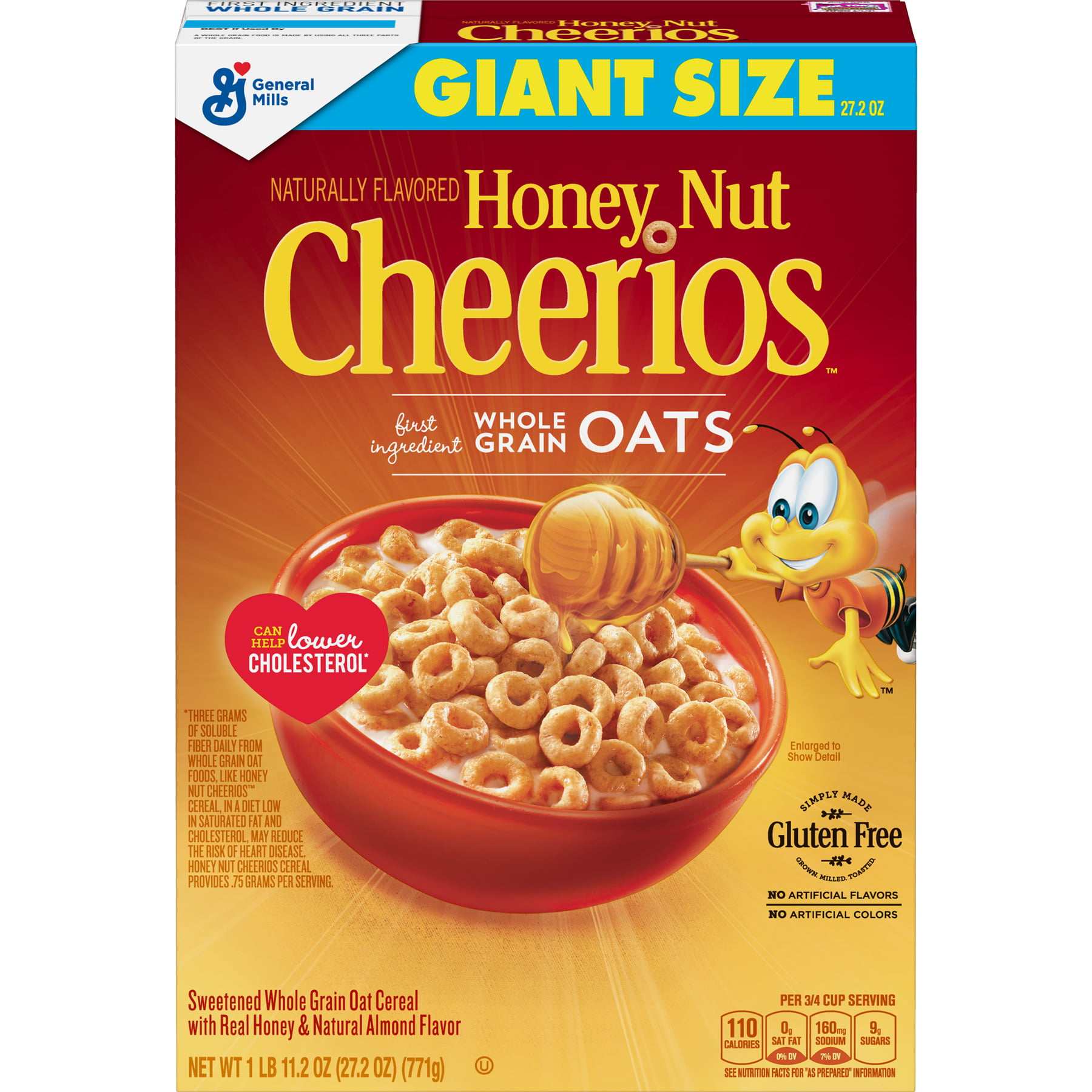
Every diet has its grifters, scammers, and celebrities of questionable character attached to it. Actually, every human interest group or endeavour has grifters attached. The carnivore diet being more of a fringe diet, the associated grifters are more fringe characters. Whereas something like the big label on Honey Nut Cheerios indicating that it is good for your heart -- https://i5.walmartimages.com/asr/75ba3310-8be0-4e36-91e6-62f... -- is also a grift, and it is a grift that is supported by our biggest corporations and most prestigious institutions.
Fair enough. I guess my assumption is that all diet advice is garbage and people should just figure out what works for them. The government and health system have obviously been of no help to people.
I was surprised to learn when my kids were born that hospital food is just about as greasy and generally unhealthy as any fast food you're likely to come across.
Except pemmican was usually made without berries unless it was being used for ceremonial reasons. It would have been the way to preserve the meat from large game kills, since pemmican lasted for a very long time.
> I do have to say it doesn't take long before you just get sick of eating meat.
I got tired of avocados first. After several years, I still can't stand them! But keto is a lot more than meat, it is nuts and berries, dairy[1], and lots of green leafy vegetables.
The # of things I can't eat on keto comes down to bread, potatoes, rice, and super sugary fruits, but it isn't like the 170 grams of sugar (!!!!) in 1/2 a watermelon was ever good for me.
> But keto is a lot more than meat, it is nuts and berries, dairy[1], and lots of green leafy vegetables.
This is the crux of it. You can have a very varied, and very flavorful experience on keto (or its variations).
> I got tired of avocados first.
This is where we have to part ways. I can see avocados, alone, getting old quickly. But I could eat guacamole every day for the rest of my life and never tire of it.
Many vegetables and some fruits can still be consumed (though not necessarily much fruit) and maintain a low-carb diet. The other thing to do, or that I did, was to use a variety of spices and herbs. Most add nothing (or very little) with regard to carbs (certainly not the processed sugars low-carb diets aim to avoid) so don't impact the diet overall. And a well-stocked spice cabinet means you can have chicken for a week or even a month and never really have the same meal twice.
> Many vegetables and some fruits can still be consumed (though not necessarily much fruit) and maintain a low-carb diet.
The other thing people don't always realize is that the longer you've been on a low carb diet, the more carbs you can eat and stay ketosis.
After 6 months or so, even an entire medium sized apple (19g of sugar) isn't likely to be a problem.
This is even more true for people who work out, heck 40g of sugar from fruit followed by 1 hour of high intensity workout, probably not an issue.
Starting out strict is needed to get on the keto train, but, but a low sugar ice cream with 10g a serving twice a week isn't going to kick most people out of Ketosis if they've been there for awhile.
Is there a technique to eating organs I don't know about? I assumed a stomach would be like eating vomit. Liver is still popular to this day, but maybe the animals whose organs we eat don't have as many metabolites in there as I thought.
I would guess much of it depends on the diet of the prey animal. Eating the contents of a carnivore's stomach would probably be awful, but that of an obligate herbivore is probably not as bad, comparatively, since it would mostly just be plant matter, perhaps slightly fermented.
You only need to take a look at the difference between the feces of carnivore and herbivores. Cow dung or rabbit pellets really aren't all that bad. Wolf or otter feces, as two examples, is pretty vile stuff.
More a technique in preparing it. Just like anything else that may seem unappetizing on its own. Sweetbreads are pretty tasty, and tripe isn't the worst if it's prepared well. Intestine can get tough if not prepared properly, which is not pleasant to me (though my in-laws seem to like it that way).
It's all about preparation. I don't think I could eat certain organs without puking just from the thought/looks. You couldn't get me to eat heart for example. I've tried to but couldn't get over it (chicken hearts actually). And even liver, I'm not sure I'd eat.
German Liver Sausage? That is one of the most delicious things on earth!
How's this for a "recipe": Beef trim (50%), beef liver (20%), beef heart (15%), and beef kidney (15%).
Take a nice piece of rye bread (best is a real sourdough rye bread), spread the Leberwurst very thick, top off with a cornichon and/or pickled mini onion. Heavenly.
I've tried chicken hearts on a skewer at Japanese restaurants a few times, and of all the organs I think it's the least organ-y. It's a working muscle and pretty much tastes like it.
I would die without Salads and other veggies... meat only would get old very fast for me. If I don't have a very heavy garden salad for too long I feel really weird and my cravings for vegetables are through the roof.
>Nutritional deficiencies came from the absence of fat and carbohydrates, not necessarily protein. Indeed, if humans eat too much meat, diarrhea usually ensues. And within weeks, they can develop protein poisoning and even die. “Because we humans are not fully adapted to a carnivorous diet, we simply cannot digest protein very well,” Lahtinen says. “It can be very fatal in a very short period of time.”
What? This seems flat out wrong. Carbohydrates are the only macronutrient you can live without. Regardless of the long term health outcomes, many people live for years on carnivorous diets.
The first sentence might be talking about our past digestive systems, but the rest is about the present.
From what I've read, protein poisoning is supposed to be a result of _exclusively_ eating exceptionally lean meats (e.g. rabbit) at the exclusion of everything else for prolonged periods of time (such that your body reserves get depleted). Beef and pork have relatively high fat content so you'd be unlikely to develop it from eating them in modern high protein diets, and even on a rabbit-only diet, it's supposedly possible to minimize the risk by also consuming the animal's organs.
For what it's worth, I first heard of protein poisoning from a survivalist, who was talking about extreme scenarios where there's very few calories available for consumption at all (e.g. winter survival in tundra)
There are certainly other well documented cases of nutritional deficiencies caused by lack of certain foodstuff (e.g. scurvy in ships in the 15th century, due to usage of copper ware, which denaturates vitamin c) so it wouldn't be strange to develop other nutritional deficiencies with a highly unbalanced diet.
I think scurvy in the 15th century was due to not including anything that might have vitamin C in the provisions. It was scurvy in the 19th and early 20th century that was due to copper pots (no one noticed because ships were much faster so sailors didn’t get scurvy), the wrong citrus juice (I don’t recall whether they had lemon or lime juice but they had the one with less vitamin C and called it by the name of the fruit with more), tinned food (babies on land were getting scurvy because the canning process destroyed vitamin C and they were only fed canned food), and contemporary doctors not really believing that scurvy was caused by the deficiency of anything.
You may be right about the dates, I was going from memory so could be mixing up my sources. The part about doctors not being aware of vitamin c deficiency as a cause for scurvy definitely rings true for one story I read about a south pole expedition
I recently caved and watched the latest season of Alone, which takes place in the Canadian Arctic, on Netflix. It basically matches the non-canine related aspects of this article.
Contestants were sent home months-in, despite having excess meat stores from hunting/fishing, because of dangerous weight loss levels. They were literally starving to death even while eating excessive amounts of protein.
There’s a separate question of how “true” the show is (looking at you Bear Grylls!) but I believe the diet aspects were done in coordination with doctors.
You are right, in modern times, carbs are generally considered bad. But some people trying all protein diets do report diarrhea. Doctors don't generally refer to it as too much protein, though. They refer to the problem as too little fiber.
Also, some arctic explorers tried living on all meat, and suffered vitamin deficiencies such as scurvy. So, while meat is a complete protein, unless you are eating fresh liver meat from a fresh kill, you are going to need some source of vitamin C at the minimum. Except for liver, meat isn't actually a great way to get fat soluble vitamins either.
Maybe the article was not clear enough, but what is correct is that you cannot eat only proteins to cover all your energy needs.
Significantly more than 50% (e.g. 2/3) of the calories you eat must come from either fat or carbs, it does not matter which, as long as it is not protein (it does not matter for preventing protein-caused problems; depending on what kinds of fat or carbs you eat, they might cause other problems).
A mixture like pemmican, which is 1/2 dried meat + 1/2 fat, has probably around 2/3 of its calories from fat, so it is perfectly OK as the only food for extended durations.
While the animals hunted by them did not have much fat in their meat, ancient humans usually took care to not waste the fatty bone marrow and brain, which were a major source of fat for them. Nevertheless, those animals still contained much more proteins than fat, so it is very likely that the humans could not eat all the meat, so they probably ate the best parts, leaving the rest to scavengers.
I have to agree with you. Having lived a zero-carb lifestyle for years in my late 20s (losing a ton of weight and becoming the most athletic I'd ever been in my life), either that line is patently false or I'm a super hero.
"zero-carb" may be true, but that does not mean that you have eaten only proteins. If that would have been true, you would have been dead.
The meat of most domestic animals is fatty, most cheese & other dairy is fatty, eggs have a lot of fat in the yolk.
Even if you did not eat any carbs, your food must have included enough fat to provide more calories than the protein content. Otherwise you would have had quickly severe health problems.
> Because we humans are not fully adapted to a carnivorous diet, we simply cannot digest protein very well
So you spent years of your life eating nothing but meat, maybe eggs? You never had dairy, never had fruits (bananas, apples, oranges, lemon in or on something), never had vegetables (carrots, onions, leafy greens) in that time period?
I'm not the OP, but a ketogenic (very low carb) diet is not exactly uncommon these days.
I follow one myself (for health reasons, I have reactive hypoglycemia), and have done for a few years now. While it was difficult at the start, after a while you get used to it. And I lost a ton of weight without even trying.
I don't eat bread, fruit (barring a small amount of lemon/lime juice in food), or any grains or root veg (potatoes are worse than table sugar for spiking blood glucose!).
I do eat meat, eggs, and lots of low-carb veg - leafy veg, broccoli, cauliflower, asparagus, chicory, aubergine, courgette, peppers, tomatoes, carrots, onions etc.
I also eat plenty dairy too - cheese has no carbs, and a small amount of milk/cream has very little.
> I do eat meat, eggs, and lots of low-carb veg - leafy veg, broccoli, cauliflower, asparagus, chicory, aubergine, courgette, peppers, tomatoes, carrots, onions etc.
This is my point to the OP, if you're eating any of those things you are still an omnivore, even if you're a low-carb omnivore. They seem to be claiming to have been on a carnivorous (only animal products) diet for years.
It's by no means unheard of, all you have to do is type "carnivore diet" into your search engine of choice to get all the information your heart may desire.
They responded to a post about humans not being suited for carnivorous diets by saying they ate a very low carb diet, therefore that report about humans not being suited for carnivorous diets is wrong or they're a super hero.
So my question to them was what they meant by that. They seemed to be implying that their low carb diet was very high in protein and low in anything not protein, or their statement was a non sequitur.
During that time, you are correct, never fruit, no milk (I ate cheese but in very small amounts i.e. burger patty with a slice of cheese), very rare vegetables.
A typical day was:
breakfast - eggs and bacon
lunch - burger patty (or 2) and cheese, or 1/2 lb of carne asada
dinner - ribeye steak
The paper Excess protein enabled dog domestication during severe Ice Age winters [1]:
> Humans are not fully adapted to a carnivorous diet; human consumption of meat is limited by the liver’s capacity to metabolize protein. Contrary to humans, wolves can thrive on lean meat for months. We present here data showing that all the Pleistocene archeological sites with dog or incipient dog remains are from areas that were analogous to subarctic and arctic environments. Our calculations show that during harsh winters, when game is lean and devoid of fat, Late Pleistocene hunters-gatherers in Eurasia would have a surplus of animal derived protein that could have been shared with incipient dogs.
This is based on reference [2] A review of issues of dietary protein intake in humans:
> A suggested maximum protein intake based on bodily needs, weight control evidence, and avoiding protein toxicity would be approx. of 25% of energy requirements at approx. 2 to 2.5 g .cntdot. kg-1 .cntdot. d-1, corresponding to 176 g protein per day for an 80 kg individual on a 12,000kJ/d diet [~2800 Cal]. This is well below the theor. maximum safe intake range for an 80 kg person (285 to 365 g/d).
This has a strangely hostile anti-paleo spin given the core finding. Here's the title:
> Dog Domestication May Have Begun because Paleo Humans Couldn’t Stomach the Original Paleo Diet
If they let the wolves eat the lean meat they didn't want, doesn't that mean too-much-lean-meat was not a part of "the original paleo diet"? Does she imagine that we had to eat it before we started to domesticate wolves with it?
> “Because we humans are not fully adapted to a carnivorous diet, we simply cannot digest protein very well,” Lahtinen says. “It can be very fatal in a very short period of time.”
Yes, if you eat all lean meat you won't last long on that. But nobody thinks that was the paleo carnivore diet that we adapted to. Our ancestors, if current hunter gathers are a guide, ate nose to tail, prioritizing the fatty parts and eating the lean parts only as necessary, else it became scraps for scavengers.
It's like saying we're not fully adapted to a plant-based diet because it's dangerous to eat too much (insert toxic plant food here). Well sure, but that just means we're better adapted to other plants or plant parts. Like we're better adapted to eating a nose-to-tail animal than just the lean meat.
I had a similar reaction, not that it's necessarily specifically anti-paleo, but that there was some motivation to cast protein in a negative light. There's a paragraph in the article that seems intentionally designed to become nutritional misinformation, ending with this:
> Indeed, if humans eat too much meat, diarrhea usually ensues. And within weeks, they can develop protein poisoning and even die. “Because we humans are not fully adapted to a carnivorous diet, we simply cannot digest protein very well,” Lahtinen says. “It can be very fatal in a very short period of time.”
The next paragraph makes a passing reference to available prey animals often being "nearly devoid of fat," but it doesn't explain that this near complete absence of fat in the diet is necessary to make protein "poisonous."
It's important to remember that "paleo" diets have little relationship to what our ancient ancestors actually ate and evolved with. We would have historically not avoided starchy, carb-filled tubers for example, which made up a major portion of the early AMH diet. Additionally, these sites are arctic and near-arctic, where the adapted behavior (and diet) is very different than what it is back in Africa.
It’s saying that our ancestors where actively avoiding ketosis which is the core of the Palio diet. Rabbit starvation doesn’t mean we can’t eat rabbits, it means we need to eat other things like fat, carbs while also eating rabbits. However, if your hunting rabbits you don’t have a source of fat in hand.
>It’s saying that our ancestors where actively avoiding ketosis which is the core of the Palio diet.
Ketosis and rabbit starvation (ammonia toxicity) are completely different things. The reason that there was too much protein in the meat was that there was not enough fat; carbohydrates are simply not available in Siberian winters.
Also, paleo diets don't aim for ketosis. Those are called keto diets, and for most people they're just a short-term rapid weight loss strategy (also useful long-term in epilepsy and possibly some autoimmune disorders). Paleo by contrast is supposed to be a long-term maintenance diet that usually doesn't aim for rapid weight loss.
Also, the downsides of "too much protein" have been well-known in pretty much every paleo discussion community since forever, since it's a well-known fact of experience among many athletes. The idea that protein toxicity is a problem in practice for paleo is silly (it wouldn't even make the top ten if you listed the real flaws).
I would not advise following paleo diets in the form they're commonly presented -- they place too much emphasis on the wrong things and contribute to the iconoclastic miasma that has been suffocating Western societies -- but the article's comparison is, nonetheless, completely off-base.
From what I have read, ammonia toxicity is believed to require a secondary issue rather than just be from an extreme protein diet. This area doesn’t have a lot of research, but the reported symptoms from rabbit toxicity are noticeably different.
You’re absolutely correct that the Palio community tries to have sufficient carbs and fat to balance things out. However, I am basing this on what I observed people eating on Palio which while not correct likely does help the perception of effectiveness.
You need to eat either fat or carbohydrate to go with the protein. If you're eating fat with the protein (and no carbohydrates), you aren't going to avoid ketosis (and you'll be OK).
>If you're eating fat with the protein (and no carbohydrates), you aren't going to avoid ketosis
Actually, you would have to restrict your protein intake to small amounts to be in ketosis. It is very easy to get out of ketosis by eating a bit too much protein because it gets metabolized into glucose.
Clarified, my point. If you have a source of fat then you don’t need to hunt rabbits. But, if you have a source of carbs then rabbits are a reasonable food source. Therefore if a hunter gather was eating rabbits they where also avoiding ketosis.
> Tame canines can guard against predators and interlopers, carry supplies, pull sleds and provide warmth during cold nights. But those benefits only come following domestication. Despite more than a century of study, scientists have struggled to understand what triggered the domestication process in the first place.
Is it so hard to believe that early humans could imagine the benefits and purposefully domesticated canines? I mean, we’ve gone to the freaking moon, for no immediate benefit at all... Humans do a lot of things for the hell of it.
I once read an article by a man who raised an undomesticated wolf. It's a huge hassle and not exactly safe. But he wound up with a relatively loyal animal that disliked being separated from him. (And which routinely wrecked his house.)
If you spend your life hunting game animals with a spear, then maybe a barely tamed wolf seems like a reasonable risk in comparison?
Yes I have a feeling dog domestication went along these lines. The first were wolf puppies that were raised with the tribe and were imprinted on this "pack" as their own as they grew up. Dogs and humans made an effective combination. The dogs could look after and protect small children, a huge benefit. Dogs might be able to partners in hunting. And finally dogs would be excellent "house alarms" when enemies are nearby.
By all accounts hunter-gatherer societies had a lot more free time than we do, and no Netflix. Personally, I'd absolutely do this just to see what would happen.
As an owner of a border collie, I'm starting to think that certain animals are too smart for domestication. Raccoons, like border collies, might just be better adept at training their humans, rather than the other way around.
We recently adopted a Sheepadoodle, and this comment really resonated with me. It's a combination of a poodle and an old english sheep dog, which many think are originally from border collies. She's a wonderful animal, but really, really needs mental stimulation! She's got us trained to be sure. :-)
It's such a particular kind of intelligence, too, in that they get such pleasure of things that honestly annoy most human beings. Ours will just go for hours rolling a ball back and forth to you, totally fascinated by the way the ball moves across the floor, and how she's getting you to do something for her. For a human, it's just tedium.
You can see how useful they'd be for moving sheep around for hours while responding to commands. They just like it. And don't care about weather, or distractions, or anything.
Last week I had mine out in the bush here and she was carrying her frisbee with her. A rabbit bolted out not 5 feet in front of her and she completely ignored it, because she was currently stopped in her tracks, busy, giving the frisbee "the eye"
Raccoons combine border collie intelligence with /hands/. I'm not sure I'd be able to handle the level of mischief these adorable critters could get up to.
I’d imagine that dog domestication also depended on wolves being pack hunting carnivores. One can imagine there’s synergies between a group of humans and a pack of wolves hunting large game.
Wild wolves are social but not particularly hierarchichal. A typical wolf pack is formed of a couple and their offsprings. Adult wolves leave the pack to form their own.
The idea that wolf pack have complex fixed hierarchical structure is mostly a myth produced by inadequate research from Rudolph Schenkel on captive wolves and popularized by even more inadequate research and a book by L. David Mech. Mech then went on to do very good work on wild wolf.
Wolves are however both social and used to complex interactions involving social dominance.
> Wild wolves are social but not particularly hierarchichal.
This is simply a lie. All wolf packs are strictly hierarchical. Meaning there is no wolf pack without a hierarchy.
> A typical wolf pack is formed of a couple and their offsprings.
Which forms a hierarchy.
> The idea that wolf pack have complex fixed hierarchical structure
Who said they had a "complex" "fixed" hierarchical structure? It's rather simple and obvious.
> Wolves are however both social and used to complex interactions involving social dominance.
"complex", "social dominance". Which is it? You say they don't have complex hierarchy and then claim complex interactions involving social dominance. What do you think social dominance exists to create?
Wolf packs have hierarchy like human families have hierarchy.
> This is simply a lie. All wolf packs are strictly hierarchical. Meaning there is no wolf pack without a hierarchy.
Tone it down a bit. You should inform yourself. I gave you the name of the author to read, Mech, in my previous post.
Wolf packs are not hierarchical. You have the parents leading because well they are the parents taking care of their offsprings and that's it. The rest of the group has no fixed hierarchy.
> complex", "social dominance". Which is it? You say they don't have complex hierarchy and then claim complex interactions involving social dominance.
Wolves have situational and individual dependants relationship some involving dominance. For example parents tend to harass their young when they approach the age of leaving. Some youngs situationaly fight other youngs but you can't establish a ranking of individual in a wild pack. That wouldn't make much sense.
I have complex relationships with my friends. They sometimes involve dominance. Yet we don't have a hierarchy.
> Wolf packs have hierarchy like human families have hierarchy.
Human families don't have hierarchy. Young children are subordinate to their parents until they come of age, a bit like in a wolf pack actually.
> I gave you the name of the author to read, Mech, in my previous post.
I'm not going to read a book for this. That's so silly. If you are the one making an outrageous claim, cite the claims yourself. It's like you claiming that the earth is flat and then demanding I read some book to "inform" myself.
> Some youngs situationaly fight other youngs but you can't establish a ranking of individual in a wild pack.
Actually, the fighting is establishing a rank.
> That wouldn't make much sense.
Of course it makes sense. Just because you say it doesn't make sense don't make it true.
> Human families don't have hierarchy.
Yes we do. Parents at top and then kids ( pretty much by age ). Ever heard of patriarchy/matriarchy?
> Young children are subordinate to their parents until they come of age
Oh so there is a hierarchy?
> I am starting to understand your confusion.
I don't have any confusion. You are confused. You say there is no hierarchy and then use words describing a hierarchy.
Most of what you read in the popular press on wolf pack is bull. That's litteraly the subject of my original comment. That's based on flawed research on captive wolves from the 70s.
>
disown 1 day ago | parent | on: Excess protein enabled dog domestication during se...
> Tone it down a bit.
What was wrong with my tone?
> You should inform yourself.
I did and I am.
"Wolfpacks are established according to a strict hierarchy, with a dominant male at the top and his mate not far behind."
>
disown 1 day ago | parent | on: Excess protein enabled dog domestication during se...
> Tone it down a bit.
What was wrong with my tone?
> I'm not going to read a book for this. That's so silly. If you are the one making an outrageous claim, cite the claims yourself. It's like you claiming that the earth is flat and then demanding I read some book to "inform" myself.
It's not a book. It's an article by one of the most prominent researcher on the subject we are discussing: "Alpha Status, Dominance, and Division of Laborin Wolf Packs" [1]. I was written in 1999 and has hundred of citations so I don't despair in the information reaching the general public one day.
What's happening here is you telling me the earth is flat as we have known for centuries and me telling you to go read Gallileo.
Like most of what you read in the general press on wolf pack, that's bull. That was the point of my original post by the way. Journalists apparently stopped following research in the 70s on this.
> Actually, the fighting is establishing a rank.
No, it's not. Once again, please, read the paper I linked.
> Yes we do. Parents at top and then kids ( pretty much by age ). Ever heard of patriarchy/matriarchy?
That's complete non sense by the way. You will be hard press to find any research supporting that.
> Oh so there is a hierarchy?
Oh but certainly, if you mean children being subordinated to their parents, yes, there is a hierarchy. Thankfully, my original post mentioned "complex fixed hierarchical structure" and I will hasard that you are clever enough to understand it implies I am not talking about the link between parents and immature children common to basically every mammals.
What people usually think of however (you included given your answer) when they speak of wolf pack hierarchy is a fixed segmentation with alpha on top followed by beta finishing with omega and an individual ranking. This part simply doesn't exist in the wild.
> I don't have any confusion. You are confused. You say there is no hierarchy and then use words describing a hierarchy.
I am going to be frank. I think you are being intellectually dishonest, looking at this discussion in bad faith, extremely condescending and very reluctant to assume you might be wrong. I kindly suggest you rethink the way you act if you hope to have any form of meaningful conversation.
i'm reading the book 'Merle's Door: Lessons from a Freethinking Dog' right now. it's about a man who befriends a wild dog and takes him home. he lets the dog live like a wild dog and gives the dog a door to his house so the dog can live as he pleases. the writer has a refreshing approach to caring for dogs. he also explores/refutes a lot of dog origin myths, while engaging with the scientific history of dog study.
Scarps left by humans generated differential survival environment where less aggressive, more cooperating individuals were able to get closer and closer humans and get the best bits. At some point most domesticated individuals could form bonds and cooperate with humans. Eventually humans could take over and use selective breeding to finalize the process.
This made me laugh. Admittedly, I don't eat much meat, because I get sick of it so easily. Somehow I imagine roots and berries were a sought after alternative.
It's an interesting take, but wouldn't it be more favourable for the humans to simply dry the meat and save it, e.g. for summer where there are enough other food sources to mix it and avoid the protein overconsumption?
If you watch Werner Herzog's "Happy People" documentary about trappers in the Siberian Taiga, and see the relationship between dog and man there, it's easy to see how this relationship could have played out. A bit of frozen fish or meat for the dog, but not too much, means protection and assistance on the trap line, and a companion through the winter.
EDIT: My border collie currently lying behind me on a bed is anxiously and steadily watching me because what she really wants me to do is put on my skis and go for a hike in the woods with her. She won't really be happy until I do that.
If a dog is useful it may be a better use of the excess protein, especially for nomadic peoples. The dog will carry around all of that extra meat and provide a service. Drying/storing the meat may also attract predators.
Yes, foraging groups in dry climates are quite sophisticated at short-term meat preservation. I know the Hadza for instance regularly dry meat on nearby tree branches or cook it over a fire.
My pet theory is that corvids and canines were best friends long before humans came around, and that we have hunted all three together, for mutual benefit.


At a certain point, I'm sure being sick of meat (especially from fairly large and omnipresent megafauna), the services of a companion dog/wolf would have been worth the waste.
Also many northern hunter gatherers eat the contents of the stomach of their kills as a way to get carbohydrates, trace nutrients and vitamins, etc. Between that and a source for furs, leathers, bones (for tool/structure making), one might make more kills than necessary and have excess meat.